
AT A GLANCE
- 50%+
- Increase in sales
- Sold out
- Summer camp, filled through paid social
- Overbooked
- Trail rides, ahead of staffing capacity
- 10.3%
- Search click-through rate at $0.35 a click
THE ONE
A parent in Caroline County with a kid who won't stop talking about horses.
Not “equestrian consumers.” One parent, on a phone, at 9pm, trying to find out whether lessons are available, what they cost, and how to book, before she loses interest or finds someone closer.
What we made.
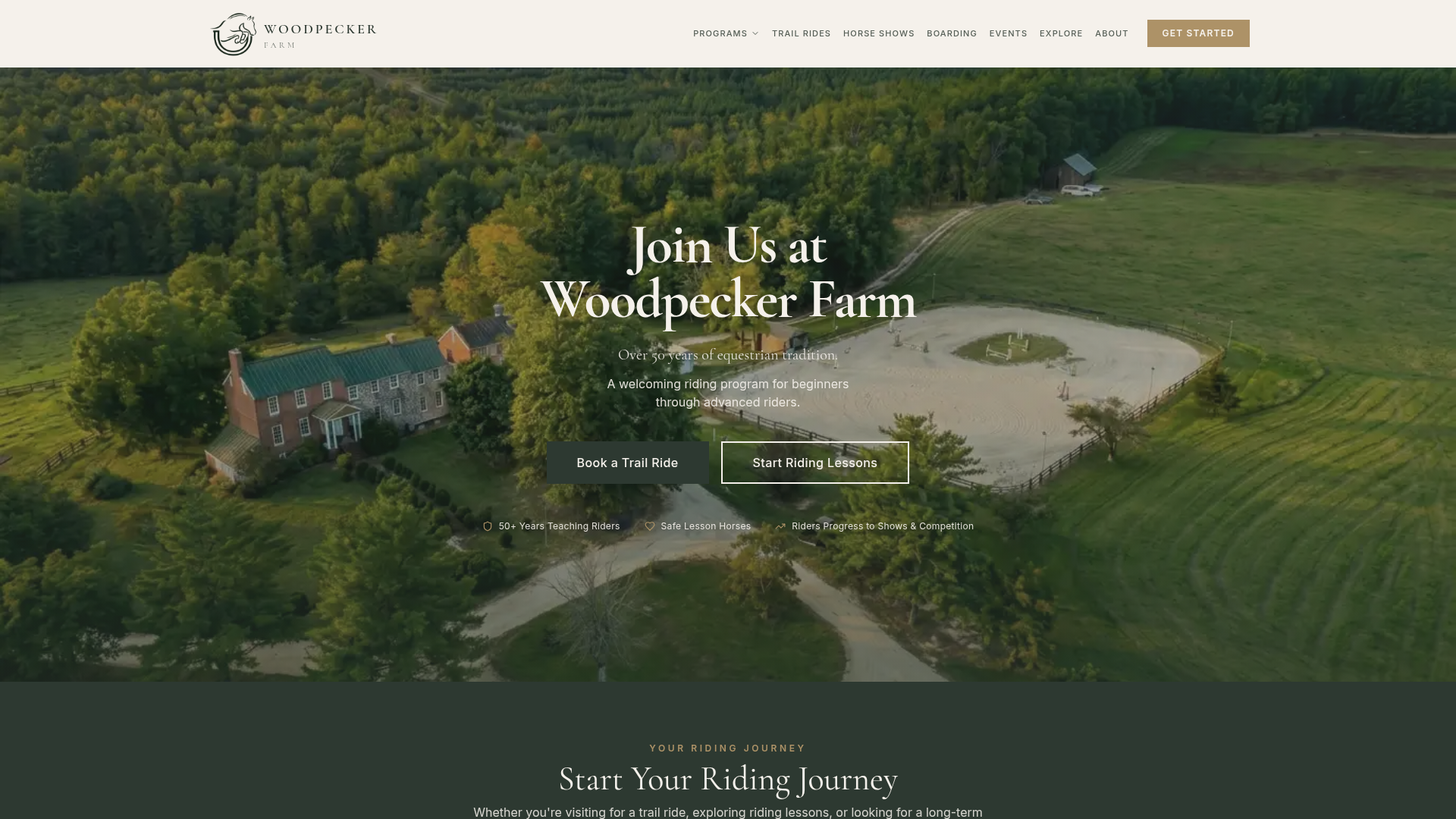
Woodpecker Farm had horses, land, and a following. What it didn't have was a way to sell what it already did well. We built the site, the backend, the rider portals, the pricing, and the ads, then stopped when demand outran the staff.
- Site design and build
- Trainer scheduling backend
- Rider and family portals
- Pricing and packaging
- Paid search and Performance Max
- Meta campaigns and creative
THE PROBLEM
A working farm running on memory and text messages.
Woodpecker Farm was full of expertise and short on infrastructure. Scheduling lived in people's heads. Riders and parents had no way to see their own information. Pricing had grown by accretion rather than design, and the things customers most wanted to buy either weren't offered or weren't visible.
There was no shortage of demand in the market. Searches for riding lessons in their counties were steady and local. The farm simply had no system to catch it, and no way to tell whether anything was working.
WHAT WE BUILT
One system, built around how the business actually works.
The website
Fast, mobile-first, and structured around the questions a parent actually asks before booking.
A trainer backend
A management layer so trainers could run schedules and riders themselves, instead of routing everything through one person's phone.
Rider portals
Riders and families got their own logged-in view: their information, bookings, and history. Fewer calls to the barn.
Pricing and structure
We repackaged and repriced services, and added offerings the market was already asking for but the farm wasn't selling.
Paid media
Search and Performance Max targeted to the counties they actually serve, plus Meta campaigns built to fill dated inventory.
Training and handoff
We handed the site over and trained the team to run it, then kept shaping it as we learned how the farm really operates.
OUTCOMES
More demand than they could staff.
50%+
Increase in sales after the new site, pricing structure, and paid media went live.
Sold out
Summer camp filled, the ads did what they were built to do on dated inventory.
Overbooked
Trail rides booked beyond available capacity.
10.3% CTR
Click-through on paid search at a $0.35 average cost per click, several times the typical local-service benchmark.
Ads slowed
We deliberately reduced spend so the farm could hire and staff up to meet the demand it now had.
The last line is the one we're proudest of. The goal was never maximum volume, it was demand the business could actually deliver on. When the system outran the staffing, the right move was to ease off, not to celebrate the number.
THE CREATIVE THAT DID IT
AI-generated video outperformed everything.
These two spots were AI-generated, and they beat every other creative we ran. Both cleared a 9% click-through rate while the static images we tested sat between 2 and 5%. Alongside them we used a mix of stock photography and our own photography shot on site at the farm. The lesson wasn't a prettier photo. It was a face, talking.
Parent testimonial · 11.78% CTR
Farm voices · 9.82% CTR
The best-clicking audience bought nothing. Broad parents, with a lower click rate and higher intent, booked every spot. We moved the budget.
What happened.
- 5X
- Revenue
- Sold out
- Summer camp
- 10.3%
- Paid search CTR at $0.35 a click